
Clear, 59° F
W hen Jackie Fales first started working to help folks experiencing substance use disorders, her goal was “to be the person everyone thought of when someone needed help.”
For me, it …
This item is available in full to subscribers.
The Powell Tribune has expanded its online content. To continue reading, you will need to either log in to your subscriber account, or purchase a subscription.
If you are a current print subscriber, you can set up a free web account by clicking here.
If you already have a web account, but need to reset it, you can do so by clicking here.
If you would like to purchase a subscription click here.
Please log in to continue |
|
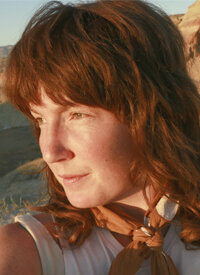
When Jackie Fales first started working to help folks experiencing substance use disorders, her goal was “to be the person everyone thought of when someone needed help.”
For me, it took only one connective conversation with Jackie for her to become the first person I think of when someone reaches out needing help.
Jackie, born and raised in Cody, entered the Park County Court Supervised Treatment Program (PCCSTP) seven years ago with a “raging substance abuse disorder [she] was lucky [she] didn’t die from.” Jackie is now the director of PCCSTP.
Meeting Jackie felt like meeting a miracle. I thought: “This is what it’s like when someone is doing what God put them here to do in the world.”
As I listened to how Jackie went from herself being a patient in the state-funded treatment program to becoming a peer specialist who served those in PCCSTP to doing case management to now being the program’s director as well as working for Open Space Counseling Service (who is contracted to provide the treatment to those in the PCCSTP), I just wanted to know how she did it.
Here before me sat a woman who had alchemized the deepest pain into the most radiant service, who works multiple jobs helping hundreds of our community’s most vulnerable, stigmatized and unresourced people, who started and runs a nonprofit (I’ll get to that!), who is willingly available as often as possible to give her time to help anyone in need; who is also a mother. And yet, I had never — and I truly mean never — seen or felt the presence of anyone so calmly, straightforwardly, iridescently at home in themselves. I felt borderline desperate to know her secret.
“To be just so grateful for all the experiences we have in life,” said a woman who lost her sister at 16 and spiraled into isolation that led to a life-threatening substance use disorder. But of course, without those experiences, how could she have arrived at her calling?
“I was so ashamed for so long of my substance use disorder,” said Jackie. “And, had I not gone through that, I don’t believe I would be where I am. I would not be as passionate about it or be able to help in the way that I am had I not had that experience. It kept me alive at the time. And it taught me a master level education.”
PCCSTP has the capacity to serve up to 30 folks at a time (from the communities of Powell, Cody, Meeteetse, Clark and Wapiti). Jackie says “the idea is that we respond to people who are struggling with substance use disorders in a way that they can learn how to manage their disease without being concerned that they will be put immediately back into jail or prison. It gives them the space to learn how to manage their disease.”
At the end of each patient’s time at PCCSTP, they do a community giveback project where “their passion meets the community’s need.” After she graduated from the program in 2020, Jackie, seeing how difficult it can be for folks experiencing substance use disorder and their families to access the resources needed for recovery, started a nonprofit called Active in Recovery (AIR).
“What I wanted to do was be someone who offers the information to people when their family member or themselves is struggling with a substance use disorder,” said Jackie. “I saw that when you were in jail, sometimes the judge would say, ‘This person can leave jail if they get a bed date for treatment,’ but it’s almost impossible, when you’re in jail. It can take months and months to try to get the information to a treatment program to get a bed date … People ask, ‘Why don’t they just go get help? Why don’t they just stop?’ … The barriers up against people who have this kind of disease are enormous, and a lot of people don’t do it.”
Understanding how to access help when someone with a substance use disorder seeks it can be the difference between life and death. And Jackie makes that difference with her nonprofit, AIR.
“My nonprofit I created to be the person who does that — who goes into the jails and fills out applications for people, who meets with family, who says, ‘Here are all the applications,’” said Jackie. “So when your family member says, ‘I want to go to treatment,’ you already have the plan in place, knowing where you’re going and what needs to be done, and you have my phone number so I can come in and get the bed date as fast as possible because you’ll lose them if it takes too long.”
Maybe living the purpose God gave each of us looks like learning to ask for and receive the help we need so we can one day offer it to others.
“I wanna help as many people as I can,” said Jackie. “And it’s hard to ask for help.”
If you or someone you know living with a substance use disorder wants help connecting to the resources that can support them, contact Jackie Fales through AIR at:
1501 Stampede Ave, Cody
(307) 250-7063
facebook.com/activeinrecoveryAIR
air.activeinrecovery@gmail.com
activeinrecovery.org


