
Mostly Cloudy, 57° F
After the Wyoming Supreme Court struck down the state’s abortion bans, Rep. Rachel Rodriguez-Williams, R-Cody, moved to block state funding for security upgrades at several courthouses, including …
This item is available in full to subscribers.
The Powell Tribune has expanded its online content. To continue reading, you will need to either log in to your subscriber account, or purchase a subscription.
If you are a current print subscriber, you can set up a free web account by clicking here.
If you already have a web account, but need to reset it, you can do so by clicking here.
If you would like to purchase a subscription click here.
Please log in to continue |
|
After the Wyoming Supreme Court struck down the state’s abortion bans, Rep. Rachel Rodriguez-Williams, R-Cody, moved to block state funding for security upgrades at several courthouses, including at facilities in Powell and Cody.
“If the state government exists to protect life, as is stated in this [funding request] letter from the Wyoming judicial branch to the legislative branch of government, then that principle must apply consistently, not selectively,” Rodriguez-Williams said Saturday, as she sought to strip $3.28 million worth of court security grants from the state’s draft budget.
Her proposal was backed by fellow Park County Reps. Paul Hoeft, R-Powell, and Nina Webber, R-Cody, but ultimately failed by a 48-12 margin. It ran into opposition from both pro-choice Democrats and pro-life Republicans, a couple of whom said they understood the sentiment but didn’t support the move.
Rep. Martha Lawley, R-Worland — who backed both of the abortion bans voided by the Supreme Court — said she was “absolutely” disappointed by the January ruling. However, she indicated lawmakers could address the court’s decision through legislation and didn’t see how they could “trade life for life” by removing the security funding.
“I’m pro-life in every area of my life. I really am,” Lawley said, “So this, I can’t quite compute [that] this is a reasonable and rational response.”
Assessing courthouse security
The funding was requested last fall by the Wyoming Court Security Commission, a body made up of representatives from the state Office of Homeland Security, the judicial branch, law enforcement, county government and the Legislature. When lawmakers created the commission in 2008, they directed it to “establish standards to protect life, property and the judicial process in the Wyoming court system.” That includes making recommendations about the “proper levels of court security” in each county.
In 2024, the commission hired the National Center for State Courts to conduct security assessments of 11 court facilities in the Big Horn Basin and the northeast quadrant of the state. The auditors recommended $3.65 million worth of upgrades at the Park County Courthouse in Cody and the county annex in Powell, the Big Horn County Courthouse in Basin and its annex in Lovell, plus the main courthouses in Washakie, Hot Springs, Johnson, Sheridan, Campbell, Crook and Weston counties.
Supreme Court Justice and commission member John Fenn told lawmakers last month that the improvements are generally expected to cost $300,000 per facility, with the work in Big Horn County potentially approaching $1 million. The Court Security Commission suggested the state provide roughly 90% of the funding — or $3.28 million — with county governments picking up the remaining 10%.
“This is for courthouse and courtroom security for the facilities, for the people who come and go in those facilities — the citizens, the jurors, the lawyers, the clerks, the staff, the judges,” Fenn told the Joint Appropriations Committee on Jan. 9.
In the last fiscal year, the commission received reports of 66 court security-related incidents, which ranged from relatively minor incidents to attempts to bring guns into court spaces, bomb threats, letters containing purported anthrax and threats towards judges.
“I think it’s always an issue. It’s always a concern,” Fenn said of the risks.
On Jan. 14, appropriations committee members voted to include the funding in their draft of the state’s 2027-2028 biennial budget.
A controversial ruling
Amid the billions of dollars included in the draft, the court security grants appeared set to cruise to approval. But tensions between the judicial and legislative branches have been heightened since the Supreme Court blocked the bans on abortions and chemical abortions that lawmakers passed in 2023.
On Jan. 6 — just a few days before Fenn appeared before the appropriations committee — he joined a 4-1 majority that ruled the two abortion laws ran afoul of a voter-approved constitutional amendment that gives residents the right to make their own health care decisions.
The Wyoming Freedom Caucus, which Rodriguez-Williams co-chairs, said in response that the high court was “filled with jurists who reject basic biology and human dignity” and called the decision “a stain on the Wyoming judicial branch.”
Just hours after the ruling, the Joint Appropriations Committee, which includes multiple Freedom Caucus members, went into a closed-door executive session and privately discussed the possibility of shrinking the Supreme Court from five justices to three, WyoFile reported. The committee ultimately didn’t take any action, but several lawmakers brought bills this session to change the way judges are selected.
Rodriguez-Williams signed onto a measure that sought to amend the Wyoming Constitution to expand and alter the panel that nominates attorneys for vacant judgeships. It would have given the Legislature more influence by allowing the House speaker and Senate president to each appoint an additional member to the Judicial Nominating Commission and would have required that most of the nine members be non-attorneys.
A separate proposed constitutional amendment, which Hoeft co-sponsored, called for voters to directly elect all judges and justices.
However, both bills failed to clear introductory votes.
Legislative retaliation?
Chief Justice Lynne Boomgaarden alluded to the ongoing controversy in her State of the Judiciary address to the Legislature, referencing “[recent] rhetoric suggesting retaliation or defunding of courts because of the outcome in one high-profile case.”
“There is no greater threat to a stable system of government than weakening the judicial branch for political gain,” Boomgaarden said.
She added that, “healthy tension between branches of government is useful and expected,” but “efforts to punish or politicize the courts are not.”
Boomgaarden asked lawmakers for a recommitment to mutual respect and noted that the Legislature “has the last word” on any unpopular decisions.
She also said the court’s decisions aren’t political, countering accusations to the contrary.
At a Freedom Caucus press conference held a short time later, Rodriguez-Williams countered that “the greatest threat to democracy isn’t reining in an out of control judiciary.
“What’s a threat is legalizing from the bench to kill people carte blanche,” she said.
Debating defunding
As she moved to strike the court security grants on Saturday, Rodriguez-Williams quoted from the funding request that Boomgaarden and Fenn submitted to the appropriations committee in November — specifically a spot where the justices cited the Court Security Commission’s statutory charge “to protect life, property and the judicial process ...”
“If this branch of government has a vested interest in protecting your life,” Rodriguez-Williams asked on the House floor, “why does it suddenly lose that interest when the life in question comes to the unborn? We can’t say life is sacred …”
Rep. Ken Chestek, D-Laramie, then interrupted with a point of order, saying the body should stick to the merits of the grant funding.
“This is an attempt to use an unpopular decision as an excuse to punish the court. That’s what I'm hearing,” Chestek said. “I think that is inappropriate.”
Speaker Pro Tempore Rep. Jeremy Haroldson, R-Wheatland, allowed Rodriguez-Williams to continue.
“Equal protection and under the law, cannot depend on size, stage of development or location,” Rodriguez-Williams said, suggesting her amendment was about consistently applying the state government’s stance on protecting life.
“A just society protects the most vulnerable first,” she added.
In the ensuing debate, no one else spoke in favor of the amendment.
Rep. Art Washut, R-Casper, who backed both of the abortion bans, recalled how similar funding has upgraded antiquated or nonexistent security systems in other court facilities. He urged the body to think carefully about nixing the grants.
“I understand the philosophical argument, but in a very practical sense, these funds are being utilized to make our courthouses safer,” Washut said before voting no.
Rep. Ken Pendergraft, R-Sheridan, another backer of the abortion bans and a member of the Freedom Caucus, noted security issues at his local courthouse, which was included in the recent assessments.
“Anybody at any time with malice or ill intent could come into there and do some damage,” Pendergraft said, adding, “As much as I understand and respect the heart of the bringer [Rodriguez-Williams], I’m going to be a no on this one.”
Rodriguez-Williams, however, stuck with her argument and urged an aye vote in her closing remarks.
“If life is sacred enough to guard with security details and improve security equipment, is it sacred enough to guard in the womb?” she asked.
Rep. John Winter, R-Thermopolis, joined Hoeft, Webber and Rodriguez-Williams in voting aye, while Rep. Dalton Banks, R-Cowley, was among the majority that voted no.


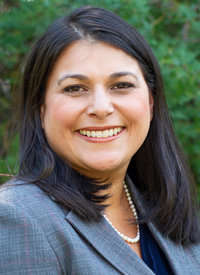
Park County residents might want to know a couple things about our Freedom Caucus Chairwoman and state representative Rachel Rodriguez Williams from Cody. RRW has a bachelors degrees in Law Enforcement and Criminal Justice Administration from Sonoma State University in central California, and a Masters in Criminal Justice from the private nonprofit Columbia Southern University based in Alabama. Rachel applied her college education by working as a Probation and Parole officer in her native California. She left that work under a bit of a cloud of an alleged medical disability and came to Park County Wyoming in 2007 for a new life and a third marriage.
My question: why would anyone with a Master's degree in law enforcement who has worked as a parole officer want to take away funding from courtroom and justice system security funding ? That makes no sense. Especially when a state funded nonpartisan study demonstrated such an urgent need for upgrading security at our Courthouses for all the jurisdictions and spectrum of justice system cases ?
Rachel RW insists on conflating courthouse security with abortion. She wants us to believe that if she doesn't get her way in making abortions a felonious criminal act, then the entire Justice System hereabouts can't have upgraded courthouse security. Won't matter if it's traffic court or a capital murder trial... no security for you , heathens. So there.
The only explanation for Rachel Rodriguez William's entrenchment is in fact political reatalion for not getting her way. It amounts to a tantrum ; political paroxysm ; a fit of pique. I am beyond feeling the least bit embarrassed for her abject obfuscation in thinking abortion and courthouse security are entwined somehow with the golden thread of " Equal protection under the law " . That is beyond preposterous. No wonder RRW's bill got shot down 4-to-1 in bipartisan voting for being irrational and unreasonable.
Oh if it were Rachel's only faux pas at the Legislature this year. It ... is ... not.
The only solution is to vote her away come August. Would some more reasonable Republicans ( oxymoronic, I know ) please run against her ? Filing for public office on the ballot starts May 14.